
Historical Context
(In late December 1978, Vietnam invaded Cambodia and overthrew the Khmer Rouge in two weeks (for more on the Khmer Rouge, see #16 of this resource). For Cambodians, these events did not end their nightmares. The invasion was brutal, killing tens of thousands of people, and food remained scarce. It also sparked a guerilla war between the new government Vietnam installed and remnants of the Khmer Rouge (and other groups) that lasted into the late 1990s. Amidst the chaos in the immediate aftermath of the Vietnamese invasion, hundreds of thousands attempted the perilous journey through war zones and mimed fields to flee the country. Bochan, then an infant, and her family were some of the lucky ones who made it to Thailand.
Of the 260,000 Cambodians who resettled in new countries between the late 1970s and late 1990s, over 150,000 came to the United States. To not overtax infrastructures and to avoid drastically changing communities, the U.S. placed small numbers of refugees in different locations. This policy was, not surprisingly, very difficult for many refugees, particularly those who were relocated to already underserved, impoverished and high-crime neighborhoods. Isolated from other Cambodians, these refugees were unable to find translators who could help them with social services or medical appointments, others who understood the trauma of living through the Khmer Rouge and its aftermath, and places where they could buy food or goods with which they are familiar. Many also faced significant discrimination. As soon as they were able, numerous people moved to locations with larger Cambodian communities, forming significant enclaves in such cities as Long Beach (California), Lowell (Massachusetts), Seattle and Philadelphia. Bochan’s family initially came to Ohio. A short time later, they moved to Colorado, and then Oakland.
Cambodian communities have had divergent experiences in the United States. While there are many success stories, others struggled to survive in the hyperghettos where they were resettled. In dominant narratives, refugees who moved to new countries are often said to have been “rescued” and found “refuge.” For countless Cambodian Americans (and other refugees), however, “refuge is never found [and] discourses on rescue mask a more profound urban reality characterized by racialized geographic enclosure, displacement from formal labor markets, unrelenting poverty, and the criminalization of daily life” (Eric Tang, Unsettled: Cambodian Refugees in the New York City Hyperghetto, p. 5). Constructing an idealized vision of the homeland they were forced to leave gives them hope and meaning, and helps them build resilience. Like Vietnamese Americans (see #15 of resource), a key component of Cambodian Americans’ idealized vision is their homeland’s popular culture of the 1960s and early 1970s.
The Music
Many consider the 1960s and early 1970s to be the “golden era” of Cambodian rock. At this time, musicians combined traditional Cambodian vocal techniques and melodic patterns with elements of popular music from the United States, Latin America and Europe. As Cambodia’s Chief of State in the 1960s (and previously King and Prime Minister), Prince Norodom Sihanouk—himself a composer—saw the thriving of Cambodian rock as a symbol of the success of his modernization program. This led him to provide substantial state support for the dissemination of this music across what was then a predominantly rural country.
Ros Sereysothea (c. 1948-c. 1977) was the most famous women singer from Cambodian rock’s “golden era.” She won a singing contest in 1963 and started a career in her native Battambang (in northwest Cambodia) as a teenager. In 1967, she moved to the capitol Phnom Penh and worked as a singer for the national radio service. Her high, clear and piercing voice soon became famous across the country. “Chnam Oun 16” (“I Am 16”) was one of her biggest hits, and it expresses the emotional turmoil of a teenager discovering love and transitioning into adulthood. The song remains central to many diasporic Cambodians’ visions of their homeland, and continues to be sung at diasporic Cambodian weddings, social events and karaoke nights. For Bochan, the lyrics represent Cambodian women’s newfound freedom in the late 1960s and early 1970s. Instead of arranged marriages, they were now free to discover love for themselves.
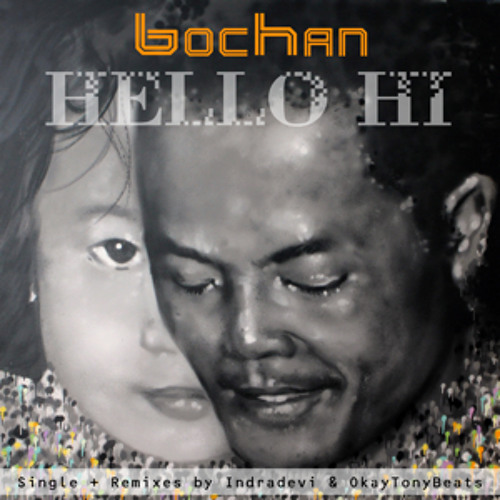
Bochan’s version of “Chnam Oun 16” is both a tribute to this song and a commentary about the trauma that Cambodian Americans continue to carry. She sings not just the original song, but also new English lyrics. Furthermore, She adds a rap by Raashan Ahmad. Near the opening, Bochan reframes her community’s narrative. Cambodian Americans are not victims who needed to be rescued (the dominant refugee narrative), but survivors of a war and genocide who have agency. Then, she recognizes how trauma, with such symptoms as recurring intrusive memories and immobilizing flashbacks, has made it very difficult for her community to thrive. In the remainder of the song, she works to convince others that, by thinking of themselves as survivors rather than victims, they can begin to heal and to move forward. This music video has been controversial within the Cambodian American community. It is widely praised, but many did not want their emblem of pre-1975 Cambodia to be mixed with the trauma of the Khmer Rouge genocide.
Resources
- Gregory Barber, “The Death And Uneasy Rebirth Of Cambodia’s Psychedelic Rock.” KPBS, August 17, 2014.
- “Bochan Huy: Artists In The Classroom Zoom Event” from Prof. Anida Yoeu Ali’s class BIS 330: Arts-in-Practice: Engaging Contemporary Artists. April 20, 2020.
- Runchao Liu, “Sounding Orientalism: Radical Sounds and Affects of Asian American Women Who Rock.” Ph.D. Dissertation: University of Minnesota, 2021.
- Real Talk: Unfiltered, “Bochan Talks Neo-Cambodian Musical Movement and Family.” Hate is a Virus, November 22, 2022 (podcast available on major platforms).