
Historical Context
Asian Americans made important contributions to the U.S.’s Western classical music scene throughout the 20th century. Most of the biggest stars were instrumentalists (see #4 of this resource), but there have also been significant vocalists, scholars, conductors, administrators and composers. Composers who established major careers between the 1950s and the 1970s include Earl Kim (1920-98), Chou Wen-Chung (1923-2019), Donald Sur (1935-99), Paul Chihara (b. 1938), and Chinary Ung (b. 1942; see #16 of this resource). Because of increased Asian immigration, changing conditions in Asia and declining discrimination in the Western classical music industry, the works of many more Asian American composers were performed on U.S. concert stages in the 1980s and 1990s.
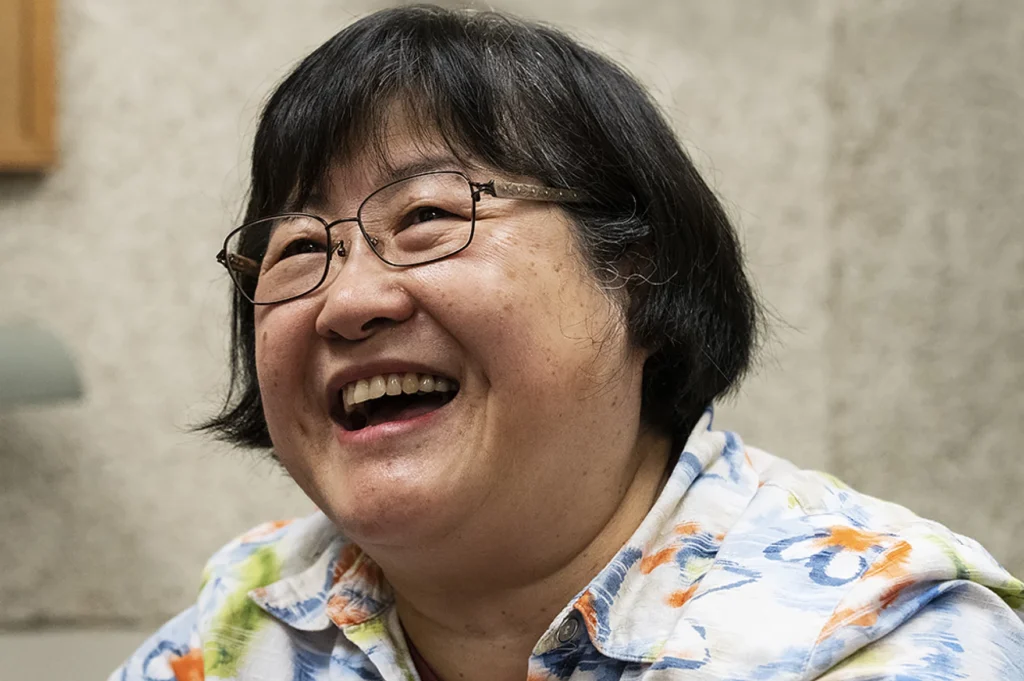
During these two decades, several of the most celebrated newcomers on the new music scene were Chinese immigrants who began their composition training in 1978, when conservatories reopened after the Chinese Cultural Revolution. Chen Yi (b. 1953) is the most prolific composer of this group and has written major works for orchestra, wind ensemble, choir, many chamber combinations and solo instruments. A professor at the University of Missouri-Kansas City since 1998, she has trained some of the most prominent composers of the 21st century.
Chen grew up learning Western classical music, beginning piano lessons at the age of 3 and violin lessons at the age of 4. Shortly after the onset of the Cultural Revolution, she was sent to the southern Chinese countryside to build military fortifications and grow rice. Then, at 17, she was appointed concertmaster of a revolutionary opera troupe (a Westernized and socialist realist adaptation of Peking opera). Although her Cultural Revolution experience was difficult, it was also very crucial for her identity formation. Specifically, she discovered that her cultural roots laid not in the Western classical music she studied as a youth, but that her “mother tongue really is the same as what the farmers speak” (quoted in Rao, “Chen Yi, Symphony No. 2 (1993), p. 127).
This newfound conviction led Chen to intensively study many Chinese musical traditions. These include Peking opera, classical instrumental music and folk genres from many parts of the country. In most of her compositions, she blends elements of one or more of these traditions with classical and contemporary Western techniques. For her, this cultural intermingling is not just an artistic choice, but also a reflection of her life experiences and a part of her mission to forge connections across cultures and to educate the public. She said, “I don’t think one should live for oneself. I got [an] education, I got the love of the word from the society. Now I must give it back” (quoted in Miller and Edwards, Chen Yi, p. 47).
The Music
Chen Yi’s Symphony No. 2 is an elegy for her father, who died in 1990. Although they talked to each other on the phone regularly, they had not seen each other since she moved to New York four years earlier. Like many elegies, it begins heavily, expressing agony through low rambling sounds. According to Miller and Edwards, this opening was inspired by the low-pitched singing of a Yao tribal leader in Guangxi. As Nancy Rao points out, it also follows the dynamic shape of percussion patterns used in Peking opera. Almost three minutes into the work, sharp percussion sounds, which according to Chen “symbolizes the sparkle of the sudden epiphanies,” break the mood. This gesture is also based on Peking opera rhythms.
In the central introspective section, we hear meandering and melancholic melodies played by the solo flute, cello and clarinet. Meanwhile, the agony and epiphany gestures introduced in the opening section can be heard in the background. They increasingly interrupt, and eventually build an extended climax that expresses the many different emotions that those in grief frequently simultaneously feel. The work concludes with a wash of shimmering sounds, which Chen says “carries a mysterious dream toward the future.” It might signify achieving some peace of mind or the emergence of hope. Nancy Rao also points out that the percussion gesture here borrows a Peking opera gesture associated with dignified characters. She writes, “To listeners familiar with the conventions of Chinese opera, the simple musical gesture also signifies the image of a man with the qualities of simple elegance, genuine aspiration, and unfeigned optimism” (Rao, “Chen Yi, Symphony No. 2 (1993), p. 129). For Chen, this newfound confidence of a brighter future ultimately stems from the teachings and character of the father she recently lost.
Resources
- Devin Patrick Hughes, “The Music Between Cultures: A Chat with Composer Chen Yi.” DevinPatrickHughes.com, Jan. 23, 2024.
- Leta E. Miller and J. Michele Edwards, Chen Yi. University of Illinois Press, 2020.
- One Symphony, “Chen Yi: Composer Harmonizing Cultures through Music” (podcast). Jan. 22, 2024.
- Nancy Rao, “Chen Yi, Symphony No. 2 (1993).” In Laurel Parsons and Brenda Ravenscroft (eds.), Analytical Essays on Music by Women Composers: Concert Music, 1960-2000. Oxford University Press, 2016, pp. 127-152.