
Second Wednesday Webinar Series
October 21, 2026: Creating Between Two Stages: Vietnamese American Identity, Music, and the Quiet Journey Toward Nursing Education
Introduction & Registration | Abstract | About the Speaker
Introduction & Registration
In this webinar, Christine Kaford, DNP, FNP details her journey from a noted singer in the Vietnamese diasporic entertainment industry to a nursing professor. In telling her story, she will place her experiences in various social contexts, including the dominant narratives of the Vietnamese American community, the expectations put on stars in the entertainment industry, the expectations of academia, and the masks that women need to put on in Asian American professional spaces. The moderator will be announced shortly.
Date and Time: Wednesday, October 21, 2026, 7-8:30pm ET / 4-5:30pm PT (Please note this is the third Wednesday of October)
Register here!
This webinar is a part of the 2026 edition of MAARC’s biannual festival. Entitled “Amplify! A Festival of Asian American Music, Sound and Scholarship,” it consists of five Second Wednesday webinars (from July to November) and an in-person festival in Chicago from Sept. 24 to 26.
Abstract
This webinar explores the layered journey of a Vietnamese American performer who transitioned from an international recording career in the early 2000s to a contemporary life in nursing education. Through an interdisciplinary storytelling format that blends spoken narrative, audiovisual archival material, and guided audience reflection, the session examines themes of cultural memory, artistic labor, diasporic expectations, and the personal negotiations embedded in shifting from a public artistic identity to a private academic one.
The presentation begins by tracing the speaker’s unexpected entry into the Vietnamese American music industry in 2003, a period marked by rapid evolution in diasporic media production. At that time, the Vietnamese American entertainment economy—shaped by anti-communist diaspora politics, the popularity of physical media, and the prominence of labels such as Asia Entertainment—functioned not only as a cultural marketplace but also as a community anchored space where young performers navigated visibility, belonging, and political meaning. The early 2000s represented a transitional era in which compact disc sales, variety-show recordings, and international touring circuits still defined success, even as digital platforms began to disrupt distribution models. The speaker’s rise within this landscape offers a lens into how diasporic communities shaped and sustained their own musical economies, and how performers were embedded within the expectations and pressures of those systems.
The session then examines the complexities of artistic identity amid public recognition. While Vietnamese American music offered a powerful site of cultural connection, it also demanded an intense degree of emotional, personal, and political exposure. As the speaker’s visibility grew, so did the tension between personal aspirations, communal narratives, and the industry’s demands. This portion of the presentation will incorporate short clips of rehearsal footage, photographs, and media artifacts to illuminate how fame within a diasporic community can be simultaneously affirming and constraining. These materials will not disclose any identifying information; instead, they serve to contextualize the broader diasporic music environment of the era.
A significant turning point occurred during the COVID 19 pandemic in 2021, when the speaker made the difficult decision to retire from the entertainment industry. The global pandemic reshaped the arts landscape and provided an opportunity for deep self-reflection. The shift away from live performance coincided with the speaker’s longstanding but largely private pursuit of tenure as an assistant professor for a university in California—a path that had been quietly maintained over many years while performing publicly. This duality—public artist, private academic professional—highlights the often-unseen resilience and multidimensionality of Asian American creatives who cultivate parallel lives in service of long-term goals that extend beyond the stage.
The second half of the presentation explores the transition from performer to educator, focusing on the speaker’s journey into nursing, graduate studies, and eventually a faculty position in nursing education. Becoming a Nursing Assistant Professor represents not only a career transformation but also a reconfiguration of identity. Whereas the music industry emphasized visibility, charisma, and emotional projection, teaching in a university environment requires authority, vulnerability, and intellectual transparency. This transition has not been without challenges: the speaker continues to navigate the fear of being judged for a past career that may not align with academic expectations or norms. This tension underscores broader issues within Asian American professional spaces, where individuals often mask artistic or culturally specific histories to be taken seriously within mainstream institutions.
The presentation concludes by inviting participants to reflect on the multiplicity of Asian American identities and the pressures that shape how individuals present themselves across different stages of life. Using a facilitated discussion model, audiences will consider how cultural memory, reinvention, and personal secrecy operate within Asian American communities, and how the arts can serve as both a site of liberation and of constraint.
The session embraces the festival’s mission to cultivate dialogue across artistic and scholarly spheres by centering a personal narrative that intersects with broader histories of migration, music-making, and professional transformation.

About the Speaker
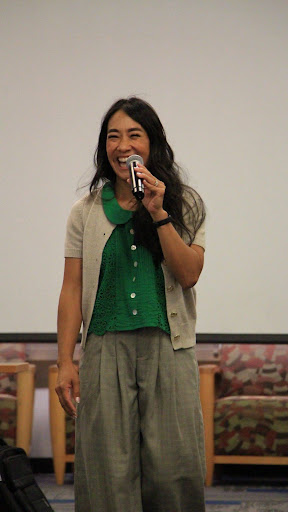
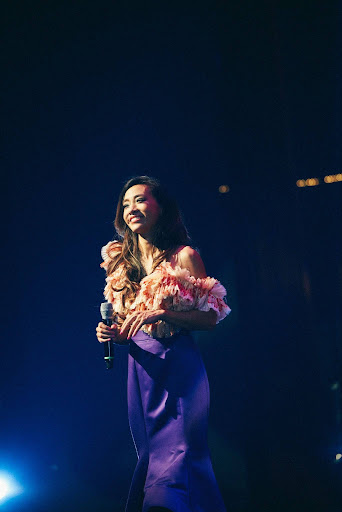
Christine Kaford, DNP, FNP is a former Vietnamese pop singer whose early 2000s recording career unfolded within the dynamic, community anchored landscape of the Vietnamese American diasporic music industry. After retiring from performance, she pursued a parallel passion for healthcare, eventually earning her doctorate and joining the faculty at California State University, Fullerton’s School of Nursing. Her work bridges artistic identity, cultural memory, trauma informed practice, mindfulness, and interprofessional education in emergency care. Drawing from both stage and clinical experience, she examines the hidden labor, reinvention, and resilience shaping Asian American creative and professional lives.